
Whoa! This felt odd to admit at first. My instinct said: browser wallets are risky, period. But then I actually spent weeks testing features, poking at permissions, and simulating attacks. Initially I thought a browser extension wallet was just a convenience tool, though then realized it could be an everyday security layer if used properly and if the wallet itself is thoughtfully designed.
Okay, so check this out—there’s a lot of fear and a lot of FUD around DeFi wallets. Really? Some of it’s justified. Some of it is noise. My first impression was skepticism, and honestly I’m biased toward hardware-first security. But I also work on the browser-extension side, so I’ve seen where extensions solve real problems for users who want speed and usability. Here’s the thing. A wallet that balances UX and protective guardrails can stop a lot of common user errors and phishing mistakes.
Let me be blunt. Most wallet compromises aren’t because of cryptography failing. They’re because people approve the wrong things. They click “Approve” on a token contract that lets a malicious actor empty the wallet. They paste seed phrases into a fake site. Something felt off about multi-approval flows for a long time. So I tracked how Rabby handles approvals, swaps, and site permissions, and I want to share what worked, what bugs me, and what I’d still watch out for.
What Rabby Gets Right — and Why it Matters
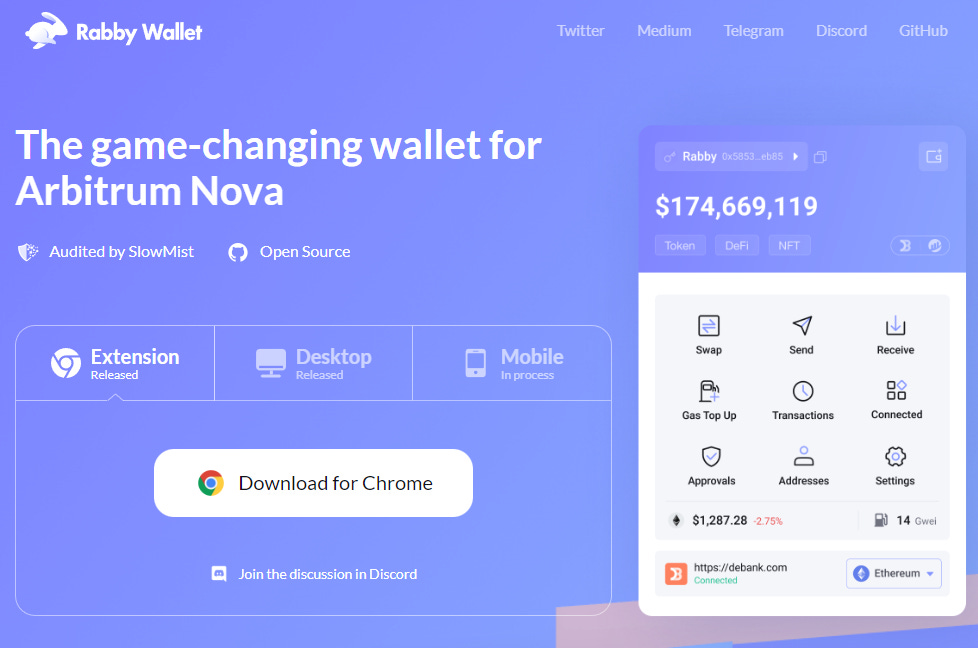
Seriously? The devs put effort into approval management. That’s a huge win. Rabby shows you the exact allowance a dApp is requesting and warns when permissions are unlimited. It even surfaces token permit risks in plain language. That matters because people rarely read on-chain contract data. Medium design choices, like grouping approvals and revocation shortcuts, cut the friction for safer behavior. Longer thought: when a wallet offers both granular control and one-click revocation tools, users are far less likely to leave broad allowances active for months, which is the exact scenario exploiters love to find.
I’m not 100% sure about every popup flow, though. Initially I thought their warnings were enough, but then I noticed some messages still read too technical for newcomers. Actually, wait—let me rephrase that: the core warnings are clear, but the nuance around a permit vs. approval can confuse non-technical users. On one hand, Rabby’s UX nudges are excellent. On the other hand, less confident users might still accept prompts without fully understanding long-term consequences.
Rabby also isolates per-site connections. That isolation reduces blast radius compared to granting blanket access. It surfaces origin metadata during a request, too. Hmm… that small detail saved me once when a phishing domain tried to mimic a legit DEX. I caught the subtle subdomain difference because the extension highlighted the origin prominently. Little wins like that add up.
I ran simulated approvals locally. The results were instructive. Rabby exposed allowances, allowed easy revocation, and logged past approvals in a readable timeline. This helps when you want to audit your activity before sleeping on a flight or while grabbing coffee in Brooklyn (oh, and by the way, I do this a lot). Long sentence here since it’s relevant: when you can glance at a clean timeline and see “oh, I approved XYZ last month” and then hit revoke in two clicks, you feel empowered to maintain a safer posture without diving into block explorers or guessing which contract to revoke.
Where I Still Want Improvements
Here’s what bugs me about a lot of wallets: confirmation fatigue. Seriously. After repeated transactions users get sloppy. Rabby helps by batching and explaining, but repeated exposure still wears people down. My solution suggestion: stronger contextual delays for risky permits and a second-chance confirmation that forces a brief pause. It’s odd, but something as simple as a required 5-second read can reduce mistakes. Something I experimented with was adding a one-line “Why this matters” note that links to an explanation overlay—works better than a dense modal.
There are integration gaps, too. Some dApps rely on older provider APIs and Rabby handles them but sometimes in a compatibility-awkward way. Initially I thought this was a bug, but then realized it’s fundamentally an ecosystem friction: wallets modernize faster than many dApps. On one hand, that’s good — wallets push security forward. Though actually, it means the wallet must gracefully bridge legacy behavior without removing safety checks.
Performance is fine for me, but on slower laptops or older Chrome profiles the extension can be a tiny bit heavy. Not a dealbreaker. Still, if you’re using many extensions (and I do—very very many), keep an eye on resource use. Also, backup UX for seed phrases is okay but could guide users through encrypted cloud backups alongside hardware recommendations. I’m biased toward hardware-first, but I acknowledge not everyone has one.
Practical Tips for Using a Browser Wallet Safely
Short checklist first. Read it quick. Revoke approvals often. Use hardware for big holdings. Don’t paste seed phrases into sites. Really, that last rule can’t be said enough.
Walkthrough: when a site asks for allowance, pause. Check the amount and whether the allowance is unlimited. If the dApp is a well-known DEX and you’re swapping small amounts, consider approving exact amounts rather than infinite allowances. Use Rabby’s revoke tool when done. If you plan repeated trades, a rolling allowance might be reasonable, but treat it like a subscription and audit monthly. My instinct said this would be tedious, but once you get the habit it feels like maintenance—like changing a filter.
Another practical move: add a second account. Keep a hot account for day-to-day swaps with limited funds. Store most assets in a cold or hardware wallet. This reduces the impact if a hot key is compromised. On one hand it’s extra management; though actually, it saves tears later. And yes, split accounts are supported by most modern wallets including Rabby, so use them.
One last pragmatic tip. Use the link below to try an installer from a reputable source and verify checksums if you can. I prefer official pages and verified downloads, not shady redirects. If you want to explore, here’s an official resource for a Rabby installer: rabby wallet download. Take the extra minute to verify the extension’s publisher and to check community reviews.
FAQ
Is a browser extension wallet as secure as a hardware wallet?
No. Hardware wallets isolate keys and are inherently safer for long-term storage. Browser wallets are great for convenience and day-to-day DeFi activity when combined with strong habits, but for large balances you should use a hardware signer and treat the extension as a companion, not a vault.
What are the most common attack vectors for extension wallets?
Phishing sites, malicious contract approvals, injector extensions, and social-engineering schemes top the list. Also, compromised device security—if your OS is infected, keys in memory can be at risk. The best defense is layered: keep your OS clean, use hardware for big funds, and be conservative with approvals.
Can Rabby help me recover from a bad approval?
Rabby can’t undo an on-chain allowance once executed, but it makes revocation easy for future risk mitigation and helps you see what went wrong. It reduces future exposure and gives you tools to respond faster.